
Moving Big, Awkward Pieces Without the Drama
You don't always need a full house move. Sometimes it's just one stubborn item — a sleeper couch that won't go round the corner, a double-door fridge headed to a new flat, a solid-wood wardrobe you inherited from your gran, or that bargain dining set you spotted on Facebook Marketplace in Muizenberg.
The trouble is that "just one item" is rarely as simple as it sounds. A couch looks easy until it meets a narrow Woodstock passage. A fridge is fine until there's a flight of stairs and no lift. This is exactly where good furniture movers Cape Town homeowners can trust earn their keep — the right vehicle, the right blankets and straps, and people who've manoeuvred awkward pieces through tight spaces hundreds of times.
This guide walks you through what a furniture-only move actually involves: the items that cause the most grief, the quick measuring check that tells you whether something will fit before the crew arrives, how to protect different materials in transit, and when it's smarter to hire a team than to risk your back and your bakkie.
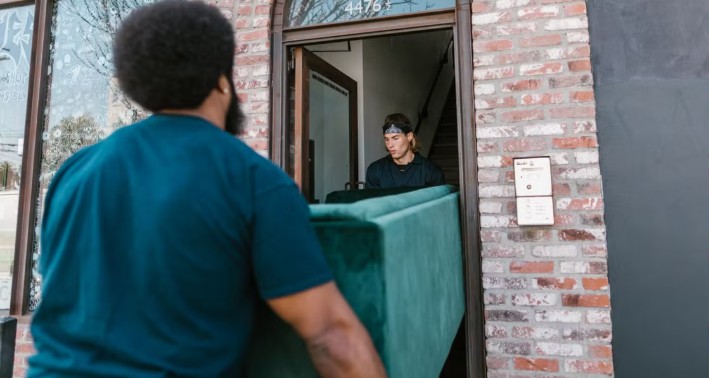
What "Furniture Removals" Actually Means (And When You Need It)
A furniture removal is a focused job: one item or a handful of large pieces, rather than the entire contents of a home. If you're relocating a whole household, that's a different service with different planning — you'll want our guide to a full home move in Cape Town instead.
Furniture removals are about scale and handling, not volume. You might only move three things, but those three things could be heavy, bulky, fragile, or all of the above. The skill is less about packing boxes and more about lifting, protecting and fitting large objects through real-world spaces.
The most common reasons Capetonians book a furniture move
- You bought something second-hand on Facebook Marketplace or Gumtree and the seller can't deliver.
- A retailer is charging a fortune for delivery, or doesn't deliver to your area at all, and you'd rather arrange your own collection.
- You're handing furniture down to family, or inheriting a piece from a relative across town.
- You're moving items in or out of a self-storage unit.
- You're refreshing one room — a new lounge suite in, the old one out to a buyer or a charity.
- You need a single bulky item shifted between two Cape Town addresses without booking a whole removal truck.
Where Cape Town homeowners buy (and collect) furniture
Knowing where the piece is coming from helps plan the collection. Capetonians source furniture from all over: the cluster of furniture retailers around Ottery, big-brand showrooms like Coricraft, @home and The Range at malls such as Canal Walk, Tygervalley, N1 City and Cavendish, and a thriving second-hand scene — Milnerton Market, the antique and collectible shops around Kalk Bay and Long Street, plus endless Marketplace and Gumtree listings.
Each comes with its own collection quirk. A mall pickup means loading-bay rules and time slots. A Marketplace collection in a residential street means confirming the seller is home, checking the item matches the photos before it's loaded, and sorting payment cleanly. A storage-unit run means access codes and trolley-friendly corridors. Mentioning the source when you request a quote helps your mover plan the right vehicle and timing.
The Furniture That Gives People Trouble
Some pieces are simply harder to move than others. Knowing which is which — and flagging them upfront — is what keeps a move smooth.
Sleeper couches and sectionals
These are deceptively heavy because of the steel mechanism inside, and their length makes corners and stairwells the enemy. Sectionals are easier when they split into modules; ask whether yours separates before assuming it's one impossible block.
Double-door fridges and large appliances
Heavy, top-loaded, and unforgiving on stairs. They should travel upright where possible, and a fridge or freezer needs to be defrosted and emptied beforehand. After transport, an upright fridge should stand for a few hours before being switched on so the compressor oil settles.
Glass tops, mirrors and display cabinets
The fragile category. Glass tops should travel separately from their bases, wrapped and stood on edge rather than laid flat where weight can crack them. Display cabinets need their loose shelves and glass doors removed or secured.
Beds, headboards and mattresses
Bed frames usually dismantle, which makes them far easier to move and far less likely to get scuffed. Mattresses are awkward more than heavy — they flop, attract dirt, and pick up damp quickly, so they belong in a cover.
Specialist pieces — pianos, safes, pool tables and antiques
These sit in a category of their own. A piano, a heavy safe, a slate pool table or a valuable antique often needs specialist equipment, extra hands, and sometimes a specialist mover entirely. Always declare these when you book — they change the crew size, the vehicle, and sometimes whether a standard furniture mover is the right call at all.
| Item | Main challenge | Smart handling |
| Sleeper couch | Hidden weight, length on corners | Confirm if it splits; measure the longest diagonal |
| Double-door fridge | Weight, must stay upright, stairs | Defrost, empty, rest upright after transport |
| Glass-top table | Cracks under flat-laid weight | Separate top from base; wrap and carry on edge |
| Wardrobe / display cabinet | Bulk, loose shelves and doors | Empty fully; remove or secure shelves and glass |
| Mattress | Flops, picks up dirt and damp | Use a mattress cover; carry on edge |
| Piano / safe / pool table | Extreme weight, balance, value | Declare upfront; may need a specialist |
Will It Actually Fit? The Measuring Trick Movers Use
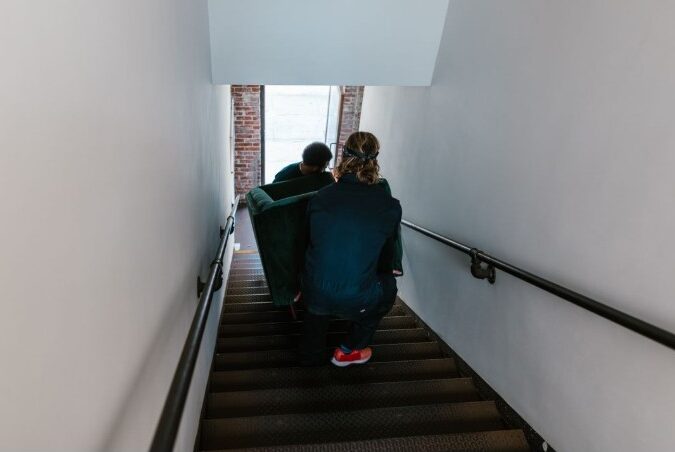
The single biggest cause of a failed furniture move is something that won't go through the door. We've seen this plenty of times in smaller homes, like when we help clients move in Observatory.
Experienced crews don't guess — they measure, and you can do the same before you even book.
The trick is that furniture rarely goes through an opening flat and square. It gets tilted, turned on its end, and angled through diagonally. So you measure the item's smallest profile (often its height or depth, not its widest face) and compare that against the narrowest point on the entire path.
A two-minute measuring routine
- Measure the item — width, height and depth. The number that matters is the smallest dimension you can present to a doorway.
- Measure the path, not just the door. Doorways, the passage beyond them, stairwell turns, and lift dimensions all count. A lift has two numbers that matter — the door opening and the internal car depth.
- Find the tightest pinch point. In Cape Town, that's often a narrow passage in an older Woodstock, Observatory or Bo-Kaap cottage, a tight stairwell turn in a City Bowl block, or a security complex with a turnstile and a long carry from the gate. We hit these pinch points constantly in the older terraced homes when moving clients in Maitland.
- Leave clearance. If the gap is only a centimetre or two bigger than the item, treat it as a "maybe" and warn your mover — knuckles, door frames and skirting boards need room too.
- Photograph the route. Pictures of the doorways, stairs, lift and parking let your mover spot a problem you might miss.
If a piece genuinely won't fit, the answer is often dismantling — bed frames, table legs, wardrobe doors and sectional modules frequently come apart. A good crew will tell you what's reassemblable and what isn't before they start.
How to Protect Furniture by Material

Protection isn't one-size-fits-all. Different materials fail in different ways, so they're wrapped differently too.
Solid wood and veneer
Wood scuffs, dents and rings. Corners take the worst of it, so they get padded first. Veneer is more delicate than solid timber and chips at the edges — it should never be dragged. Moving blankets, not plastic alone, are the friend here; plastic against bare wood in a warm vehicle can trap moisture.
Leather and fabric upholstery
Leather scratches and creases, and it doesn't like being shrink-wrapped tightly in the sun — it needs to breathe. Blankets over a breathable cover work better. Fabric upholstery is mostly about keeping it clean and dry, especially through a damp Cape winter collection.
Glass and mirrors
Glass is wrapped, edge-protected, and ideally crated or boxed, then carried and stored on its edge rather than flat. A glass top laid flat with anything resting on it is asking to crack on the first bump.
Mattresses
Slip it into a mattress bag or cover. It keeps out dirt, damp and road grime, and stops the mattress sliding around in the vehicle.
DIY or Hire Furniture Movers? An Honest Answer
Not every furniture job needs a professional crew. Sometimes your own car or a borrowed bakkie is perfectly sensible — and sometimes it's a false economy that ends in a damaged item, a scratched wall or a hurt back.
| Your situation | Honest call |
| A single small chair, a bedside table, flat-pack still boxed | DIY is fine |
| One bulky item, ground floor both ends, easy parking | DIY if you have help and straps |
| Heavy or fragile item, stairs, no lift, or a long carry | Call furniture movers |
| Glass tops, antiques, leather suites, appliances | Call furniture movers |
| Piano, safe, pool table | Specialist movers |
| Tight access, narrow passages, or a security complex | Call furniture movers |
What a Furniture Move Costs in Cape Town
Because furniture removals are smaller and more defined than full house moves, they're often priced per trip or per item rather than by the hour — which makes them predictable. The main factors that move the number are the number and size of items, floors and stairs (especially with no lift), the distance across the metro, and access at both ends.
These are the same forces that shape any local move, just on a smaller scale. For a proper breakdown of pricing models and how to compare quotes fairly, see our guide on how to compare and choose moving companies. The headline rule still holds: a quote based on your actual items and access beats a vague phone-estimate every time.
Booking Furniture Movers Near You: A Quick Checklist
A few minutes of prep gets you a sharper quote and a smoother collection:
- Note the pickup and delivery suburbs and full addresses.
- List the items with rough dimensions for the big ones.
- Measure the tightest doorway, passage, stairwell or lift at both ends.
- Take photos of the items and the access routes.
- Flag anything fragile, heavy or specialist (glass, appliances, piano, antiques).
- For a Marketplace or Gumtree collection, confirm the seller's availability, agree who inspects the item before loading, and sort payment cleanly.
Confirm who'll be present at each end to point things out and approve placement.
FAQs About Furniture Removals in Cape Town
In general, yes. But we (FTH) don't help with single-item moves. However, we're happy to help with small moves that contain multiple items.
Measure the couch's smallest dimension and compare it to the narrowest point on the route — not just the front door, but passages, stair turns and any lift. Leave a few centimetres of clearance, and if it's tight, send photos and measurements so your mover can plan for tipping, turning or dismantling.
Yes, marketplace and second-hand collections are very common. Confirm the seller will be there, agree to inspect the item against the listing before it's loaded, and have payment arrangements sorted in advance.
Yes. If a retailer's own delivery is expensive, slow, or doesn't reach your suburb, a furniture mover can collect from the showroom or loading bay and deliver to your door.
These are specialist items because of their weight, balance or value, so always declare them upfront. They may need extra crew, special equipment, or a dedicated specialist, and that affects the quote and the booking.
Wood gets corner padding and moving blankets rather than plastic pressed straight onto the surface. Leather is kept breathable and blanket-wrapped rather than tightly shrink-wrapped in the heat. The goal is to prevent scuffs, dents and moisture marks.
Many pieces dismantle — bed frames, table legs, wardrobe doors, sectional modules. A good crew will identify what comes apart and reassembles before they start, which often solves a "won't fit" problem on the spot.
Ready to Move That Furniture?
A furniture move shouldn't mean a wrenched back, a scratched wall, or an item stuck halfway up the stairs. With the right vehicle, the right protection, and a team that's moved every awkward piece you can imagine through Cape Town's tightest doorways, it's a quick, calm job.
If you're searching for furniture movers near me or comparing furniture removals Cape Town options, FTH Transport can help. Tell us what needs to move, where it's coming from and going to, and any access details, and we'll come back with a clear, fair quote.
Request a furniture removal quote — and explore the full range of moving services Cape Town homeowners use while you're at it.